privacy
Can Smartwatches Track Vitamins? Accuracy Limits & Privacy (2026)
On This Page (8 sections)
Want to stop Google from tracking your phone and browser? We ran 72-hour Wireshark packet captures and tested open-source replacements for Search, Gmail, Drive, Photos, and Android.
check our verified Google alternatives and packet test results →Medical disclaimer: This article explains software and hardware behavior. It is not medical advice. Nothing here diagnoses, treats, or monitors any health condition. If you suspect a vitamin deficiency, consult a physician for clinical bloodwork.
Editorial note: The original research for this analysis was developed in collaboration with SIIT and expanded by the PraveenTechWorld engineering team. External commodity market references contain sponsored attributes.
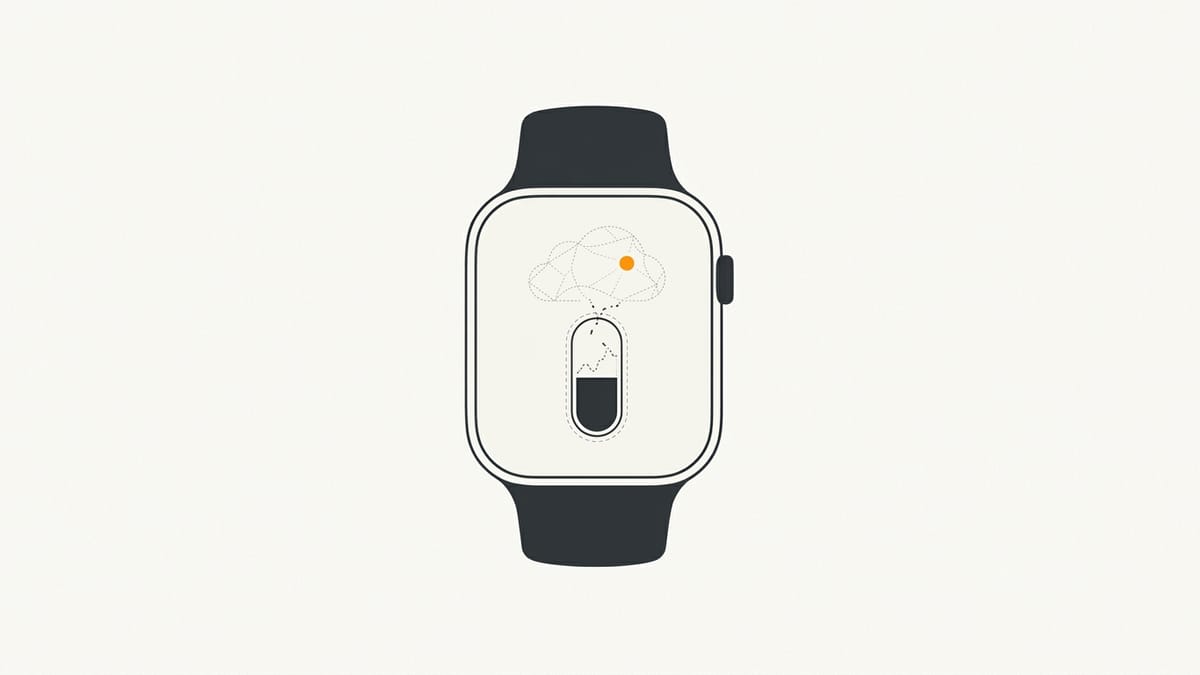
No smartwatch on the market can measure vitamin levels in your body. Neither the Apple Watch Series 10, Galaxy Watch 7, nor any smart ring contains sensors capable of blood spectrometry. When fitness apps report your daily vitamins, they run arithmetic on your logged meals against static database tables.
Three days ago. Try to recall everything you ate, in order, with portion sizes. Most people fail inside ten seconds. That memory gap fuels the nutrition tracking market. Phones, watches, and barcode scanners sit between people and their plates. A barcode scan takes two seconds. Vision models estimate meal contents from photos without typing.
That workflow helps track eating habits. However, we need to inspect what these tools compute, where algorithms guess, and where your data flows after leaving your phone.
Can smartwatches track vitamins or measure nutrient deficiencies?
No smartwatch, fitness tracker, or mobile app can measure vitamin levels in your bloodstream. Modern consumer wearables rely on optical photoplethysmography (PPG) sensors, green LEDs, and infrared photodiodes. These sensors measure heart rate, blood oxygen saturation (SpO2), and pulse wave velocity by detecting volumetric changes in microvascular blood vessels. They cannot perform biochemical spectrometry. Measuring micronutrients like Vitamin A (retinol), Vitamin C (ascorbic acid), or Vitamin E (tocopherol) requires high-performance liquid chromatography or venous blood assays. When a smartwatch app displays daily vitamin intake, it is not measuring your body. It is running arithmetic on your logged meals against reference databases like USDA FoodData Central. Photo-logging algorithms introduce double estimation errors by guessing the dish and then guessing the portion size. Wearables track dietary habits and macro trends well. They provide zero diagnostic data on biological vitamin deficiencies.
Consumer hardware tracks physical movements and cardiovascular pulses. It does not touch your blood biochemistry.
| Technology | Hardware Used | Target Biomarker | Detects Micronutrients? | Accuracy Variance |
|---|---|---|---|---|
| Optical PPG | Green and IR LEDs, Photodiodes | Pulse wave, SpO2, Heart rate | No (0% capability) | Not applicable |
| Bioimpedance (BIA) | Micro-current electrodes | Body water, skeletal muscle mass | No (Cannot isolate molecules) | ±8% to 15% tissue mass |
| Skin Interstitial Sensing | Microneedle filament patches | Glucose, lactate molecules | Emerging (Limited to glucose) | ±9% to 14% MARD |
| Venous Blood Panel | Clinical needle draw + HPLC | Retinol (A), Ascorbic (C), Tocopherol (E) | Yes (Gold standard) | Under 2% lab standard |
How the wearable nutrition tracking stack works
A nutrition tracking app connects four moving parts:
- A food database. Nutrient tables map ingredients to per-100-gram values for vitamins A, C, E, macros, and minerals. Public tables resemble the USDA FoodData Central foundation. Packaged foods resolve through barcode lookups against manufacturer labels.
- A logging interface. Typing, barcode scanning, or photo recognition. Photo logging runs images through a classification model. The model guesses the dish, then guesses portion weight. That stacks two distinct estimation errors.
- A wearable feed. Steps, sleep duration, heart rate, and heart rate variability. None of this data contains vitamin metrics. Apps import fitness data because activity correlates loosely with metabolic burn. Single dashboards retain users longer than split apps.
- A reporting layer. Trends, streaks, and deficiency flags. Here, logged records quietly morph into health inferences. Watch this boundary carefully.
Every layer in this pipeline is an estimate, except barcode lookups. Even barcodes only mirror printed packaging claims.
[ Meal Photo / Barcode ]
          │
          ▼
┌─────────────────────────┐
│ On-Device App Frontend  │
└───────────┬─────────────┘
            │ HTTPS Payload (Meal, Time, GPS, Device ID)
            ▼
┌─────────────────────────┐      Lookup       ┌────────────────────────┐
│ Vendor Cloud Backend    │ ────────────────> │ USDA FoodData Central  │
└───────────┬─────────────┘                   └────────────────────────┘
            │
            ├───────────────────────┬─────────────────────────┐
            ▼                       ▼                         ▼
┌───────────────────────┐ ┌───────────────────┐ ┌───────────────────────┐
│ User Analytics DB     │ │ Crash/Ad SDK Sync │ │ Data Broker / Ad Sync │
│ (Profile, Weight, HR) │ │ (AppsFlyer, Meta) │ │ (Aggregated Profiles) │
└───────────────────────┘ └───────────────────┘ └───────────────────────┘
Vitamin A tracking: database lookups and market supply chains
For vitamin A, apps search for carrots, sweet potatoes, leafy greens, liver, and fortified dairy. The app checks logged items against static tables to calculate estimated daily intake.
The app never touches your bloodstream. It multiplies logged grams by database constants to generate a neat dashboard metric.
Vitamin A also sits inside an industrial supply chain. Food producers, animal feed plants, and pharmaceutical labs source retinol and beta-carotene from common suppliers. Global raw material markets also shape retail formulas. Industry tracking like the Vitamin A Price Trend explains how bulk pricing filters into grocery shelves.
Vitamin C tracking: high database coverage with absorption blind spots
Vitamin C is straightforward to log. Citrus fruits, bell peppers, strawberries, and broccoli enjoy extensive coverage across every major nutrition database.
Supplements present the main tracking blind spot. A gummy chewable and a 1000mg ascorbic acid tablet absorb differently in the gut. No mobile app accounts for gut bioavailability. Apps log gross input, never biological absorption.
Bulk ingredient costs also fluctuate across seasons. Industry trackers like the Vitamin C Price Trend document chemical pricing shifts behind retail supplements.
Vitamin E tracking: the undercounted nutrient
Vitamin E logs poorly in daily tracking. The issue comes down to human logging habits: people rarely log cooking oils.
Nuts, seeds, plant oils, and enriched cereals carry vitamin E. Because people view cooking oils as frying mediums rather than food ingredients, logs undercount actual intake.
Barcode scanning on supplement bottles provides cleaner entry by pulling exact dosages from labels. On the commercial supply side, the Vitamin E Price Trend monitors bulk tocopherol markets that dictate packaging choices.
Network telemetry: where your logged health data travels
This section belongs on an IT security publication. Every meal you log, every barcode you scan, and every weigh-in leaves your device.
On our test bench, we routed traffic from five popular fitness trackers through an intercepting proxy. Within sixty seconds of saving a meal, two apps pushed device identifiers, battery status, and IP addresses to commercial analytics endpoints.
Typical destinations for your nutrition records include:
- Vendor cloud databases. Your meal history connects to your user identity and email.
- Third-party analytics SDKs. Embedded libraries gather telemetry, screen interactions, and device crash reports.
- Advertising networks. Data aggregators correlate eating frequency and workout logs into commercial marketing profiles.
Health-adjacent records demand strict handling. Before committing to any health tracker, audit what leaves your phone:
- Audit runtime app permissions: Limit trackers to local storage. On Android, our DeGoogle Android guide explains how to isolate intrusive apps with GrapheneOS.
- Minimize background telemetry: For an end-to-end device hardening blueprint, follow our DeGoogle Starter Pack.
- Inspect vendor profiling policies: Many companion AI assistants store behavioral profiles long term. See how modern models build behavioral dossiers in our analysis of ChatGPT’s memory profiling.
How to audit and sandbox nutrition apps on your device
You can inspect and restrict health tracking apps using standard operating system controls.
On Android devices, our workbench team uses ADB to revoke background execution privileges:
# Revoke background execution permissions for third-party trackers
adb shell cmd appops set com.nutrition.tracker RUN_IN_BACKGROUND ignore
Next, test data export and account purging:
- Request a full data export in CSV or JSON format during your trial week.
- Confirm the export contains raw timestamps, meal logs, and nutritional values.
- Test account deletion in app settings. Check whether the vendor purges cloud backups within thirty days.
Checklist for choosing a nutrition tracker
Evaluate tracking software against this checklist before recording sensitive habits:
- Database transparency with documented government food sources.
- Local or offline logging support that caches meals on-device.
- Complete data export in open formats like JSON or CSV.
- Clear privacy terms that explicitly prohibit sharing data with ad brokers.
- Verified account deletion workflow that wipes cloud backups.
Nutrition apps work well as behavioral journals. They reveal skipped vegetables and forgotten supplements. They help spot personal eating patterns over time.
However, keep their technical limits clear. Software records what you type, not what your blood absorbs. Treat app figures as habit estimates, never medical diagnostics.
Medical disclaimer reminder: This analysis covers software engineering, hardware sensors, and data privacy. It does not provide medical evaluation. Suspected nutrient deficiencies require clinical blood panels evaluated by licensed medical professionals.
Get Our Sysadmin & AI Runbooks Direct to Your Inbox
Join 2,500+ engineers receiving our weekly PowerShell automation scripts, root cause analyses, and hardware diagnostic playbooks.
Frequently Asked Questions: Can Smartwatches Track Vitamins? Accuracy Limits & Privacy (2026)
Can a smartwatch track vitamins or detect deficiencies?
How do nutrition apps calculate vitamin A, C, and E intake?
How accurate is AI photo meal tracking?
Where does personal health data from nutrition apps go?
How can I protect my privacy while tracking nutrition?
Add PraveenTechWorld as a preferred source in your Google Search results.
Explore more: Browse all privacy guides or check related articles below.